
Start with the actual business problem
Most operations teams do not need a lecture on quantum computing. They need a better way to decide which crew goes where, which route happens next, and which trade or vehicle is blocked by capacity limits.
QUBO is a modeling tool, not the product
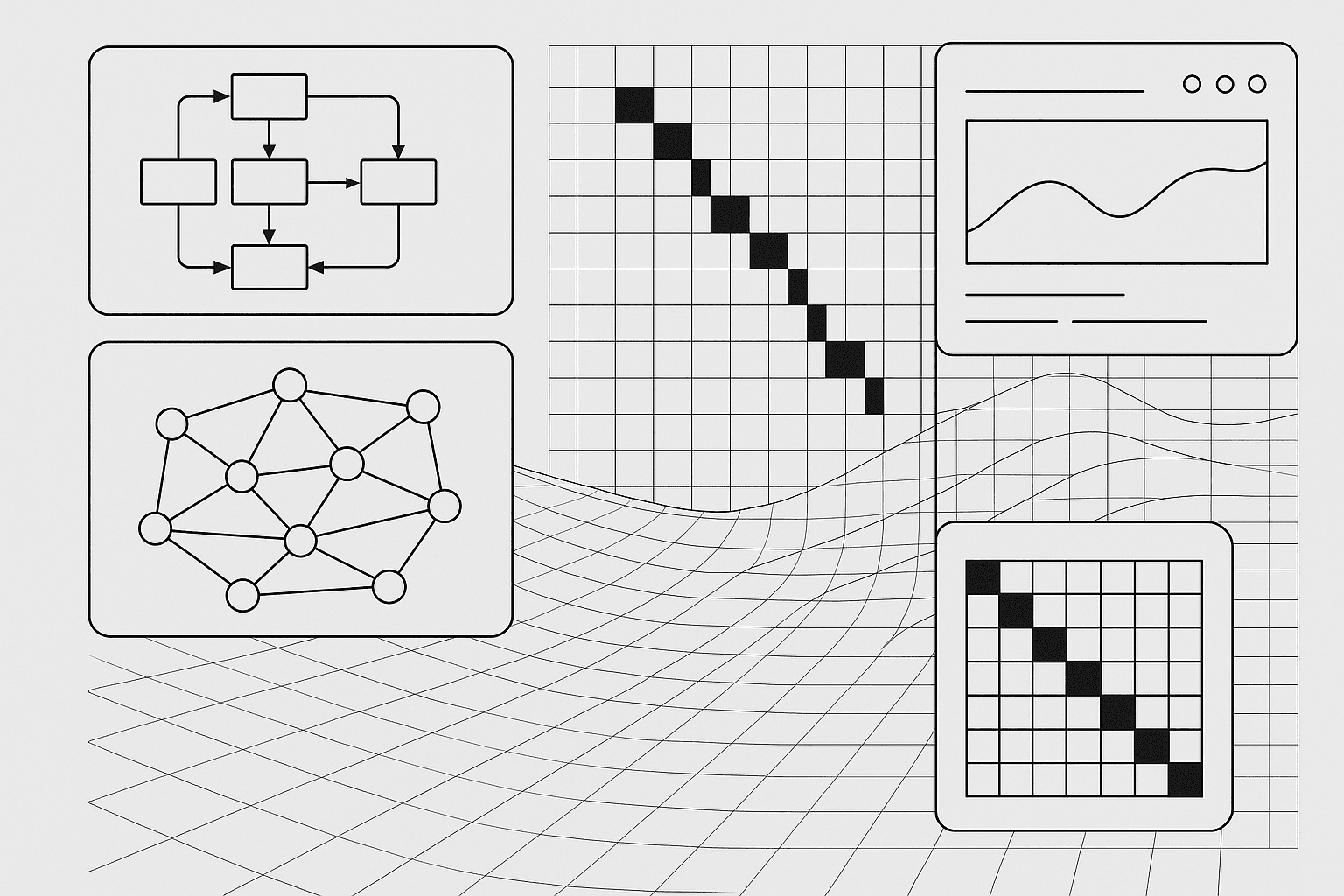
Quadratic unconstrained binary optimization is one way to express a hard decision problem in a solver-friendly format. Qtangl uses this kind of formulation to map constraints and objectives into a structure that can be evaluated systematically.
QAOA fits into a hybrid workflow
In the MVP story, QAOA is a method inside the system rather than the system itself. Classical preprocessing shapes the problem, quantum-assisted search explores candidates, and classical post-processing returns an operational result that teams can use.